Why Sheer Curtains Matter in Dubai Homes
Dubai receives an average of 3,500 hours of sunshine annually, according to the UAE National Center of Meteorology. That level of sunlight creates two persistent challenges for homeowners: excessive indoor heat gain and UV damage to furniture and flooring. Sheer curtains address both issues by diffusing direct sunlight before it enters the living space.
Beyond climate control, Dubai’s high-density apartment developments — particularly in areas like Dubai Marina, JBR, and Downtown — place neighbors close together. Sheer fabrics provide daytime privacy while maintaining outward visibility, a combination that heavier curtains cannot offer.
This guide covers fabric selection, room-specific recommendations, pricing based on current market rates, maintenance for dusty environments, and where to shop across the city.
Choosing the Right Fabric for Dubai’s Climate
Voile
Voile remains the most practical sheer fabric for this region. Its tight weave diffuses light effectively while resisting dust accumulation — a significant advantage in an environment where sand particles are a constant presence. Voile also maintains its shape after repeated washing, which extends its usable life considerably.
Chiffon
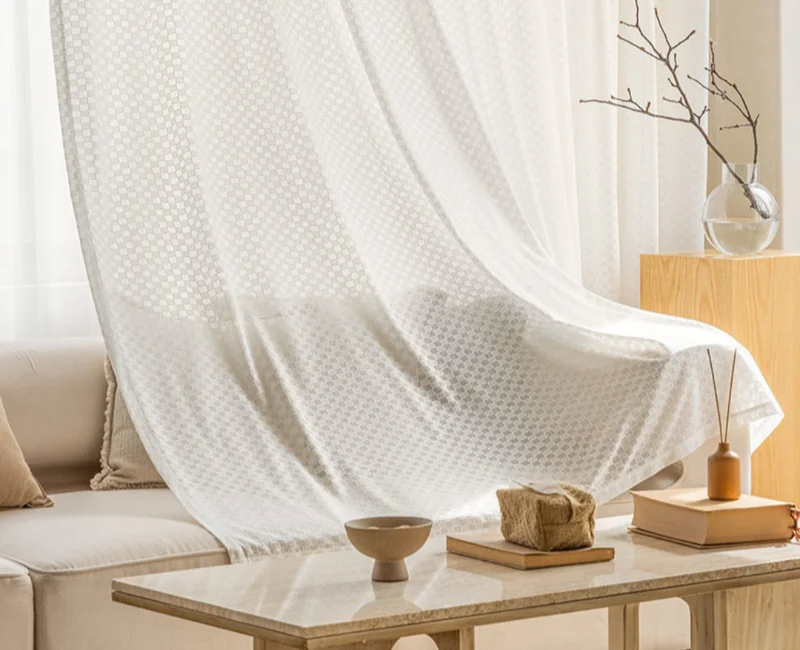
Chiffon offers a softer drape than voile, creating an elegant flow that works well in bedrooms and formal spaces. The trade-off is durability. Chiffon is more susceptible to snags and requires gentler handling during cleaning. Homes located near ongoing construction may find chiffon needs more frequent maintenance.
Linen Blend
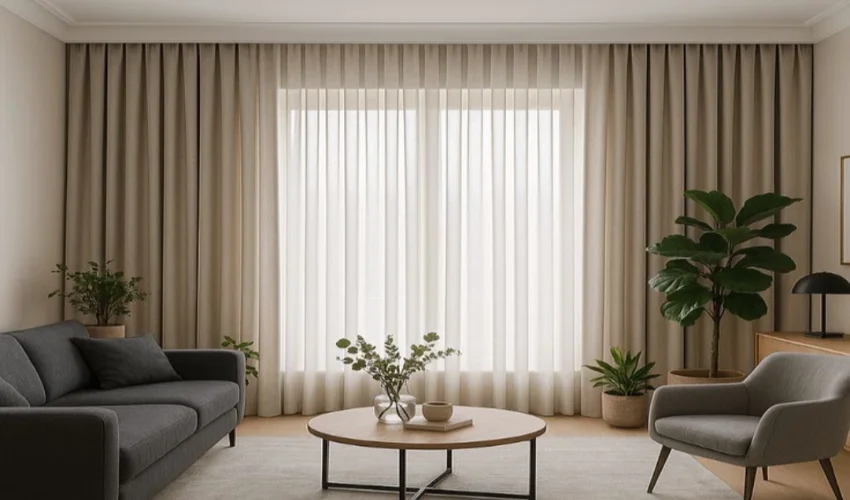
Linen-blend sheers carry a visible texture that adds depth to neutral interiors. They are slightly heavier than voile, which provides better light control and a more structured appearance. The main drawback is wrinkling — linen blends crease more easily and may require light steaming after washing.
Polyester
Polyester sheers are the most cost-effective and low-maintenance option. Modern polyester weaves have improved significantly and no longer carry the stiff, artificial look of older versions. They resist wrinkling, handle machine washing well, and show minimal yellowing from UV exposure compared to natural fibres.
Embroidered Sheers
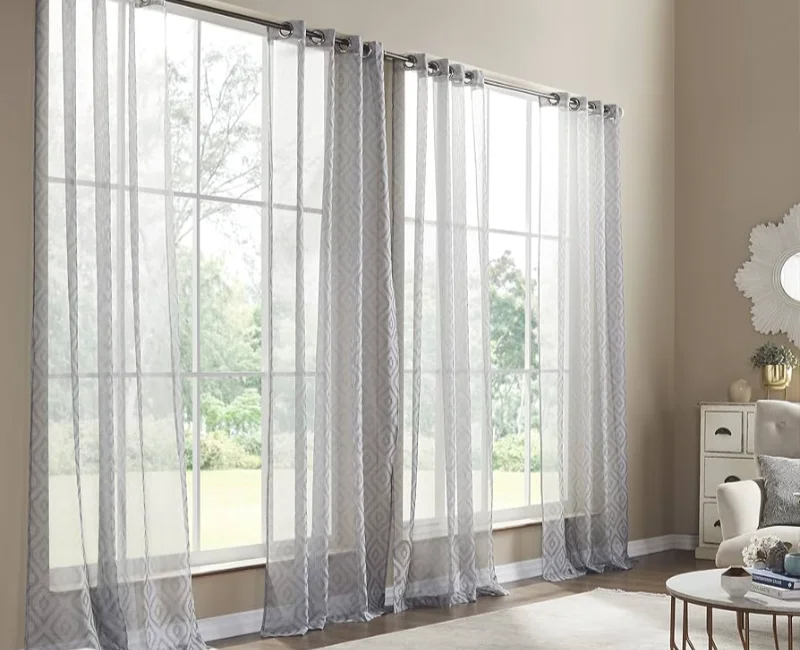
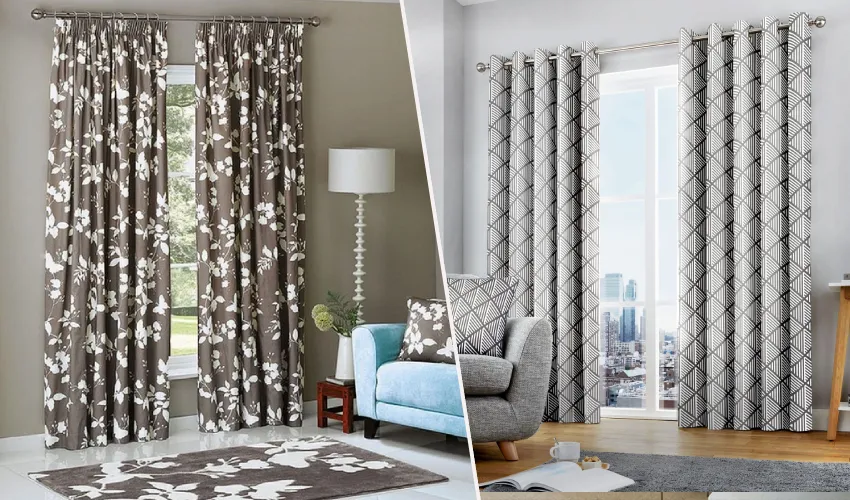
Embroidered options introduce subtle patterns — floral, geometric, or abstract — that add visual interest without overwhelming a room. These work best as feature window treatments rather than full-home solutions, primarily because the embroidery adds cost and the patterns may clash with bold interior elements.
Colour Selection: What Actually Works
Colour choice in sheer curtains interacts strongly with Dubai’s intense natural light. Fabrics that appear soft indoors can look washed out under direct sun, while darker tones absorb more heat than most homeowners realize.
White sheers maximize brightness and suit small apartments where expanding the sense of space is a priority. However, against white walls they create a flat, clinical appearance — ivory or cream is usually the safer choice in these cases.
Ivory and cream tones introduce warmth without reducing light flow. These are the most versatile options and work across virtually all interior styles.
Beige and taupe ground a room with an earthy quality. They pair well with wooden furniture and Arabic-inspired decor but may feel heavy in already warm-coloured spaces.
Light grey delivers a contemporary edge that suits urban apartments and home offices. It reads as neutral without the warmth of ivory or the starkness of white.
Soft blush and pale blue are trend-driven choices that work well in specific contexts — bedrooms for blush, waterfront properties for blue — but carry a higher risk of looking dated as trends shift.
Room-by-Room Guidance
Living Rooms
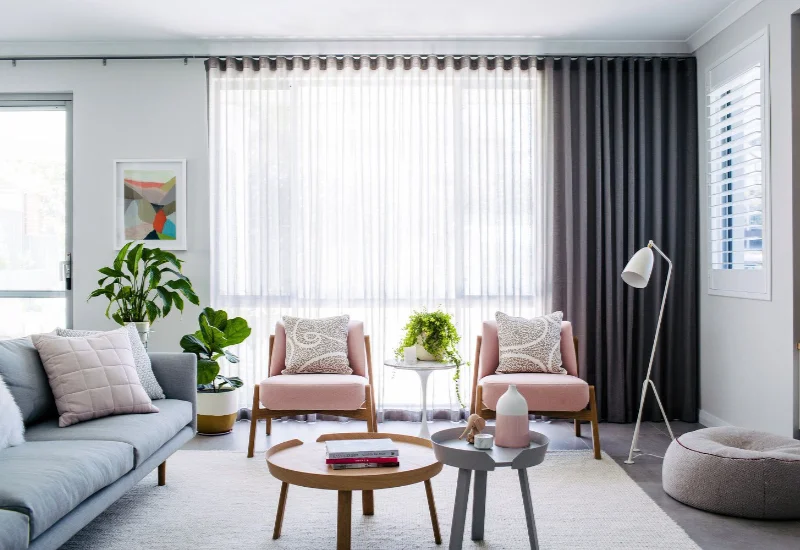
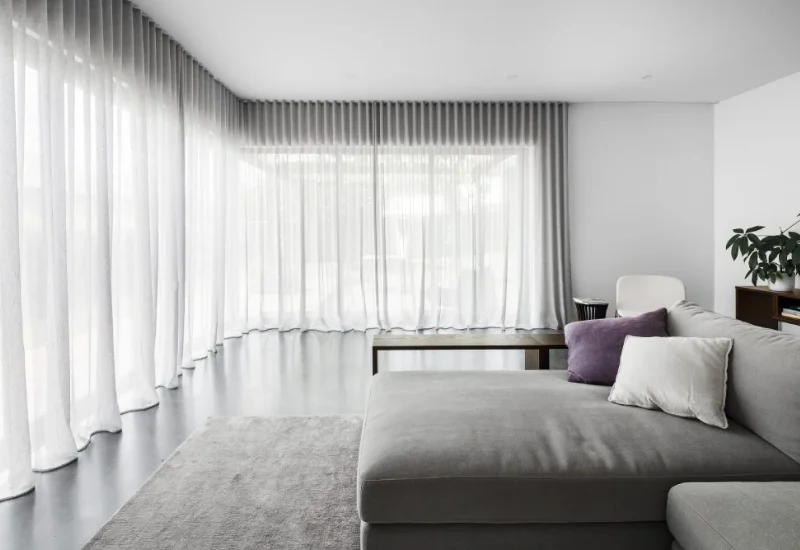
Floor-to-ceiling voile or linen-blend panels in a neutral tone provide the most versatile solution. For windows with landmark views, keep the fabric unobstructed and lightweight. Triple-width panels create fuller gathers that look more substantial.
Bedrooms
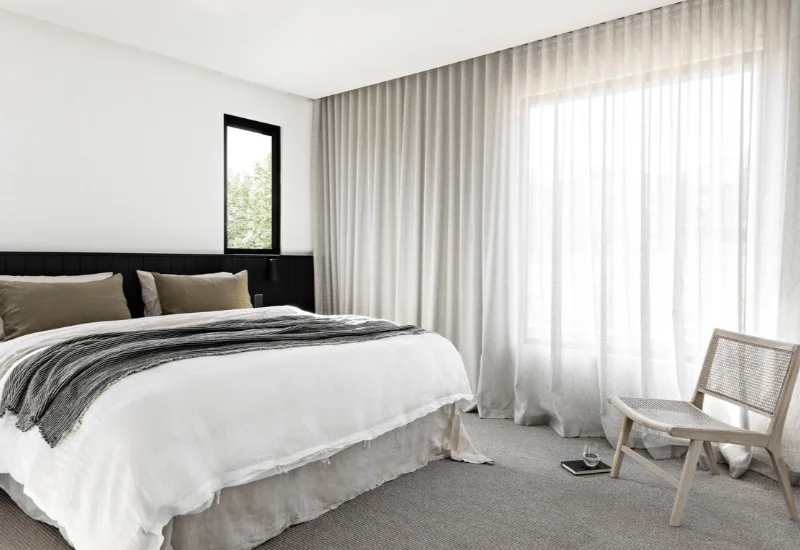
Privacy and light control take priority. Chiffon or densely woven voile works well during the day, but pairing sheers with a blackout layer behind them is essential for sleeping comfort. This dual-layer approach also improves thermal insulation at night.
Kitchens
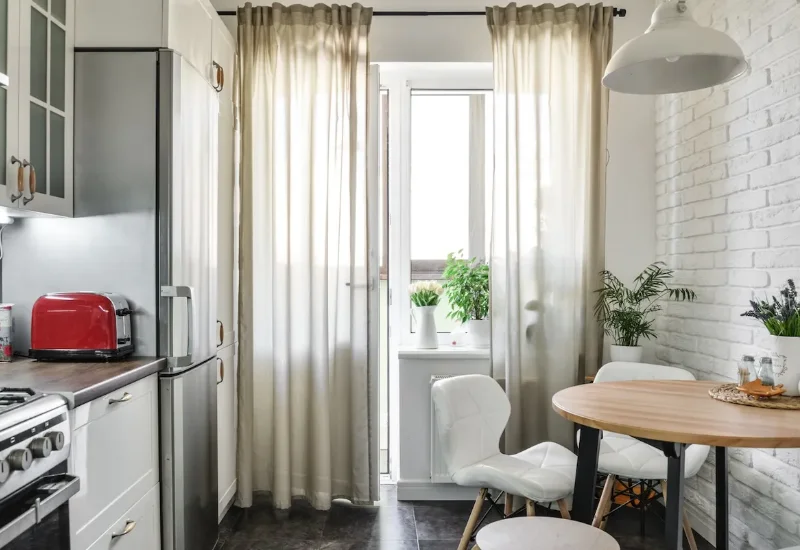
Sill-length polyester sheers in white or light grey handle humidity and cooking residue effectively. Choose machine-washable fabrics and avoid anything that trails below the counter line.
Bathrooms
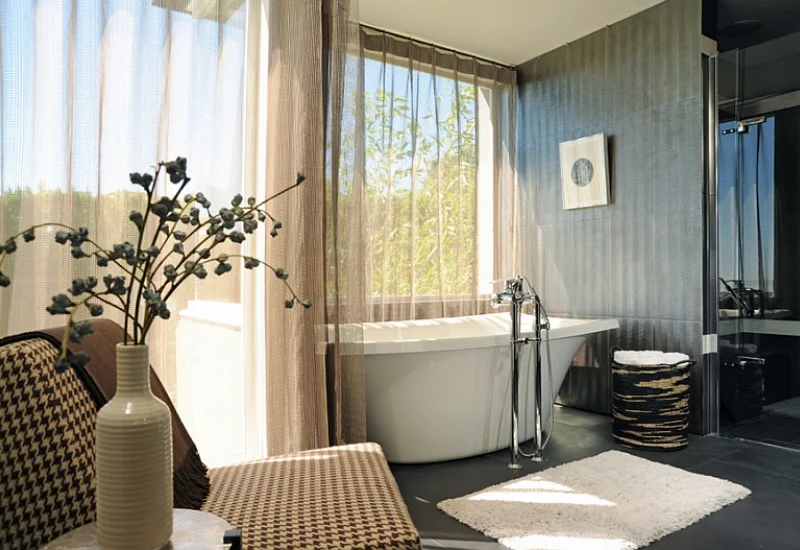
Short synthetic sheers that resist moisture and mildew are the only practical option. Sill-length polyester voile dries quickly and does not promote mold growth the way natural fibres can in humid conditions.
Majlis Spaces
Embroidered or subtly patterned sheers with gold or bronze thread detailing complement traditional Arabic interiors. Layer these with heavier drapes that can be drawn for formal occasions.
Ready-Made vs Custom: An Honest Comparison
Ready-made sheers from retailers like IKEA, Zara Home, or Dragon Mart typically cost between AED 30 and AED 300 per panel. They are available immediately and work acceptably for standard-sized kitchen or bathroom windows. The limitation is sizing — most ready-mades come in 120cm or 150cm widths, which rarely cover Dubai’s oversized windows adequately without visible gaps.
Custom sheers are cut and stitched to your exact window dimensions. Prices start around AED 150 per panel for basic polyester and can exceed AED 800 for premium linen or embroidered fabrics. The turnaround time is generally five to ten days. The advantage is a proper fit that looks intentional rather than improvised — this matters significantly in primary living spaces where windows serve as focal points.
For a single studio or a guest bathroom, ready-mades are a reasonable choice. For living rooms, master bedrooms, and any window wider than 200cm, custom fabrication delivers noticeably better results.
Current Market Pricing in Dubai
| Category | Price Range Per Window |
| Ready-made basic polyester | AED 60 – AED 300 |
| Ready-made from premium brands | AED 200 – AED 600 |
| Custom voile, standard grade | AED 300 – AED 800 |
| Custom linen blend | AED 500 – AED 1,200 |
| Custom embroidered or designer weave | AED 800 – AED 2,000+ |
| Motorised sheer systems | AED 2,000 – AED 5,000+ |
These ranges reflect prices observed across major retailers and custom curtain providers in Dubai as of mid-2026. Actual costs vary based on fabric origin, panel width, heading style, and whether installation is included. Many custom providers waive installation fees on orders above AED 1,500, but this should be confirmed before committing.
Where to Shop: Options Across the City
Online Providers
Sheer Curtains Dubai services like DubaiCurtain.com offer home consultation, measurement, fabrication, and installation without requiring a store visit. This model suits homeowners who want to avoid spending weekends driving between retail locations. The trade-off is that you cannot browse the full fabric range in person before ordering, though sample swatches are typically available on request.
Dragon Mart
The largest concentration of affordable curtain suppliers in Dubai. Prices are competitive and bargaining is expected. Quality varies significantly between individual shops — inspect stitching and fabric weight before purchasing. Installation is rarely included and must be arranged separately.
Karama and Bur Dubai
These neighbourhoods house numerous mid-range curtain shops offering custom stitching. Turnaround times are reasonable and prices sit below premium providers. The downside is inconsistent service quality and essentially no after-sales support or warranty coverage.
Mall Retailers
Stores like Zara Home and H&M Home in Dubai Mall, Mall of the Emirates, and City Walk stock ready-made sheers in current seasonal designs. The quality is good and the shopping experience is polished, but prices run high and sizes remain limited to standard dimensions.
IKEA Dubai Festival City
The most accessible budget option for simple, clean ready-mades. Suitable for temporary furnishing or small windows. The range is narrow and designs follow a global template rather than reflecting regional needs.
Al Barsha Curtain Shops
Several established curtain houses in Al Barsha offer mid-to-premium custom work with better craftsmanship than budget areas. Expect higher prices and limited online presence — most require in-person visits for consultation and fabric selection.
Trends Worth Knowing About
S-wave headings have largely replaced pencil pleats in new Dubai installations. The continuous wave pattern creates a cleaner, more contemporary line that suits the city’s predominantly modern architecture.
Motorisation is moving beyond luxury villas into mainstream apartments. Sheer curtains on battery-powered or hardwired tracks that respond to smartphone apps and voice commands are increasingly requested, particularly in developments marketed as smart homes.
Double sheer layers — combining two different fabrics on a single rod — add depth that a single layer cannot achieve. This technique is popular in Marina high-rises where floor-to-ceiling windows benefit from additional visual complexity.
Textured neutrals are gaining ground over flat white sheers. Fabrics with visible weave patterns, slubs, or gradient effects provide interest without introducing colour that might conflict with existing decor.
Maintenance in a Dusty Climate
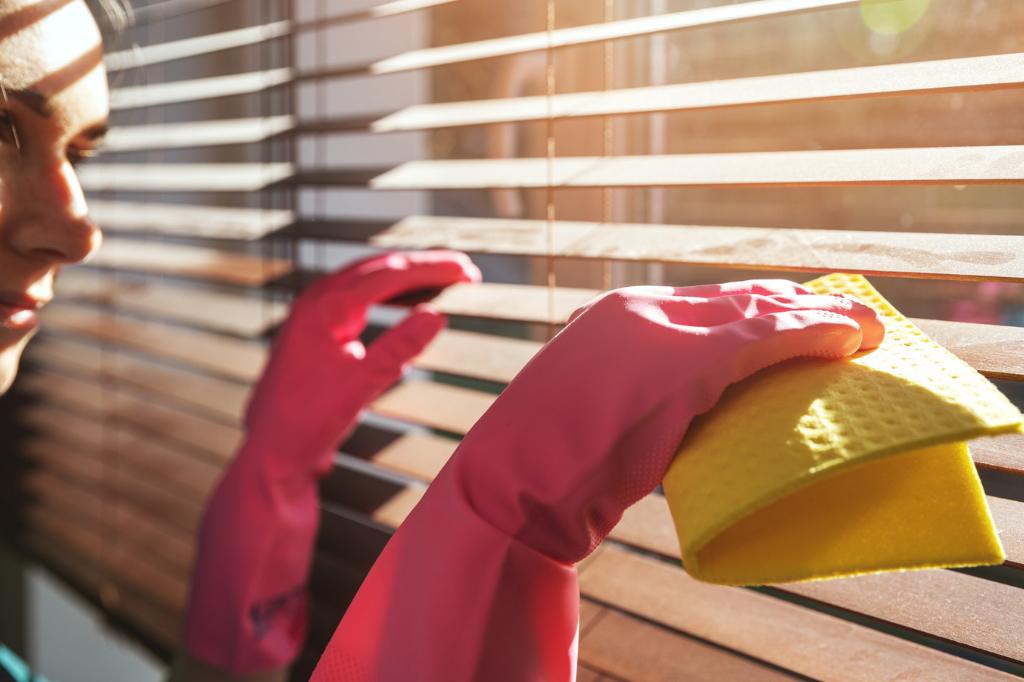
Dubai’s airborne dust affects sheer curtains more visibly than heavier fabrics because the fine particles show against light, thin material. Weekly vacuuming with a soft brush attachment is the most effective preventive measure. Waiting until dust becomes visible usually means the fabric has already absorbed particles that are harder to remove.
For washing, cold water on a delicate cycle with mild detergent is the standard approach. Bleach damages sheer fibres and should never be used. Hang panels while damp rather than using a dryer—the weight of the water helps the fabric straighten naturally, reducing the need for ironing.
Windows receiving direct afternoon sun may cause sheers to yellow over 18 to 24 months, depending on the fabric. UV-protective window film applied to the glass behind the sheers slows this process considerably, though it does not eliminate it entirely.
Premium fabrics — particularly embroidered and linen-blend sheers — benefit from professional dry cleaning every six to twelve months rather than home washing, which can damage delicate weaves.
Common Mistakes That Cost Money
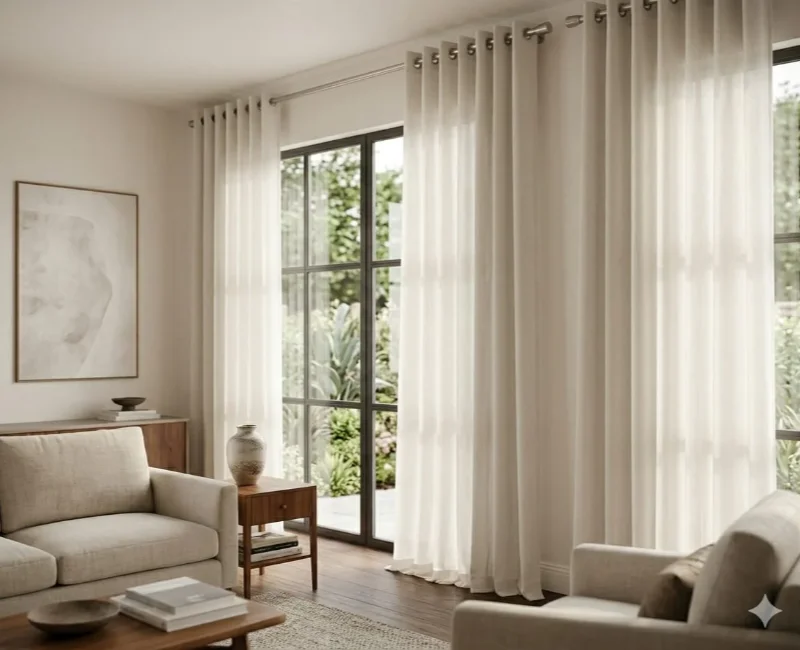
Under-ordering fabric width. Panels that barely cover the window when closed look sparse and cheap. The total fabric width should measure at least twice the window width, with triple width delivering the fullest, most polished appearance.
Ignoring rod placement. Mounting the rod at the top of the window frame wastes potential height. Placing it 15 to 20cm above the frame and extending it 10 to 15cm beyond each side makes the window appear larger and allows the fabric to stack clear of the glass when opened.
Selecting colour under artificial light. Sheer fabrics look dramatically different under store lighting versus Dubai’s natural sunlight. Requesting a swatch and examining it against your actual window eliminates this risk entirely.
Skipping hem weight. Air conditioning creates enough airflow to keep lightweight sheers in constant, distracting motion. A narrow lead tape sewn into the bottom hem adds just enough weight to keep the fabric hanging steadily.
Choosing intermediate lengths. Sheers that stop several centimeters above the floor serve no design purpose and look like an error. Select either sill-length, floor-length, or a deliberate pooling effect — nothing in between.
What to Look for in a Curtain Provider
Regardless of which supplier you choose, several factors separate competent providers from unreliable ones in the Dubai market.
Accurate measurement. A proper provider measures each window individually rather than estimating from floor plans. Ceiling heights in Dubai apartments often vary by several centimeters between rooms, which affects length calculations.
Fabric transparency. Reputable shops allow you to hold fabric samples against direct light before purchasing. This is the only reliable way to assess how much light a sheer will actually filter in your specific space.
Clear pricing. The quoted price should include fabrication, heading style, and installation. If any of these are listed separately or described as “additional,” request a complete breakdown before ordering.
Installation guarantee. Professional installers should correct any issues — uneven hem lines, loose rods, or misaligned brackets — at no extra charge within a reasonable period after fitting.
After-sales support. Curtains that shrink, yellow, or develop defects within the first few months should be addressed by the provider. Shops that offer no warranty or become unresponsive after payment deserve caution.
Frequently Asked Questions
Do sheer curtains actually reduce indoor temperatures?
Sheer curtains reduce direct heat gain by scattering sunlight before it enters the room, but the effect is moderate rather than dramatic. Studies on light-filtering window treatments generally show a 10 to 25 percent reduction in solar heat gain compared to uncovered windows. For meaningful temperature control, layering sheers with blackout curtains or applying reflective window film produces significantly better results.
How long do sheer curtains last in Dubai conditions?
Lifespan depends on fabric quality, sun exposure, and maintenance. Well-maintained custom voile or polyester sheers typically remain in good condition for three to five years. Ready-made options in direct sun may show yellowing or weakening within 18 to 24 months. South and west-facing windows accelerate deterioration due to more intense afternoon exposure.
Are motorized sheers worth the additional cost?
For single windows, the convenience may not justify the price premium. For homes with multiple large windows — particularly hard-to-reach installations like ceiling-height panels — motorization eliminates daily manual effort and reduces wear on the fabric from repeated handling. Integration with smart home systems adds further value for homeowners who already use automated lighting or climate control.
Can sheer curtains provide enough privacy at night?
No. Sheers provide daytime privacy because the brighter exterior makes it difficult to see inside. At night, when interior lights are on and it is dark outside, the effect reverses and silhouettes become visible. A secondary layer — blackout curtains, blinds, or shutters — is necessary for nighttime privacy in any room facing external areas.
Should I choose sheer curtains or blinds for my Dubai apartment?
This depends on priorities. Sheers offer a softer aesthetic, better sound dampening, and a more residential feel. Blinds provide more precise light control and are easier to clean in dusty environments. Many homeowners combine both — sheer curtains for ambience with roller or venetian blinds behind them for functional light management.