Most curtain-buying guides recycle the same generic advice — “measure twice,” “buy extra fabric.” This isn’t that list. These are the seven mistakes Dubai homeowners actually make, in apartments and villas from Marina to Arabian Ranches, learned from fitting rooms against this city’s sun, dust, and humidity rather than a Pinterest board.
1. Buying by Window Width Alone, Ignoring Fullness
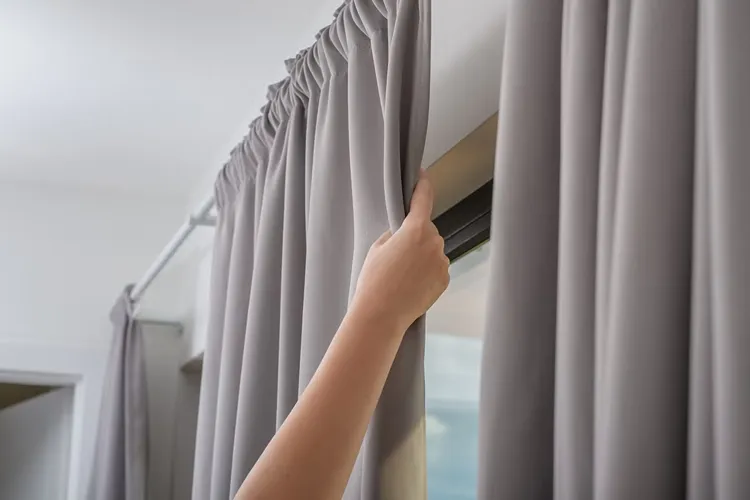
Ordering curtain fabric equal to your window width is the single fastest way to end up with flat, skimpy panels that look like a bedsheet strung across the glass. Curtains need fullness — the fabric has to gather in soft folds, not hang taut. The rule of thumb is 2x to 2.5x the track width for pencil-pleat and pinch-pleat headings, and slightly less (around 1.8x) for eyelet on a pole.
In Dubai, this mistake tends to happen with ready-made panels bought in a hurry from a souq or homeware chain, where the packaging lists a single “fits windows up to” width that buyers mistake for the actual fabric width. The fix is straightforward: measure the track or pole width (not the window), then multiply by 2 to 2.5. If you’re unsure, our guides on how to choose the right curtain length and standard curtain sizes walk through the math step by step.
2. Choosing the Wrong Heading for the Track You Have
Heading style and track type are a matched pair, not separate decisions. Eyelet curtains only run on a pole. Wave heading only works on a compatible wave track with specialised gliders. Pencil pleat runs on a track OR a pole with rings. Mixing these up is the second most common cause of curtain callbacks in Dubai — the fabric arrives, the heading doesn’t fit the existing hardware, and either the curtain goes back or the track gets ripped out.
The Dubai-specific version of this mistake: homeowners order wave curtains because they look modern in a showroom photo, without realising their existing track is a standard cord-draw that won’t hold the wave tape. The result is sagging, uneven returns, and a wave that flattens within a week. Before ordering, photograph your track and send it to the supplier. If you’re considering wave specifically, read our complete guide to wave curtains first, and our primer on different types of curtain hooks to confirm what your hardware actually accepts.
3. Skipping Professional Measurement on Made-to-Measure Orders
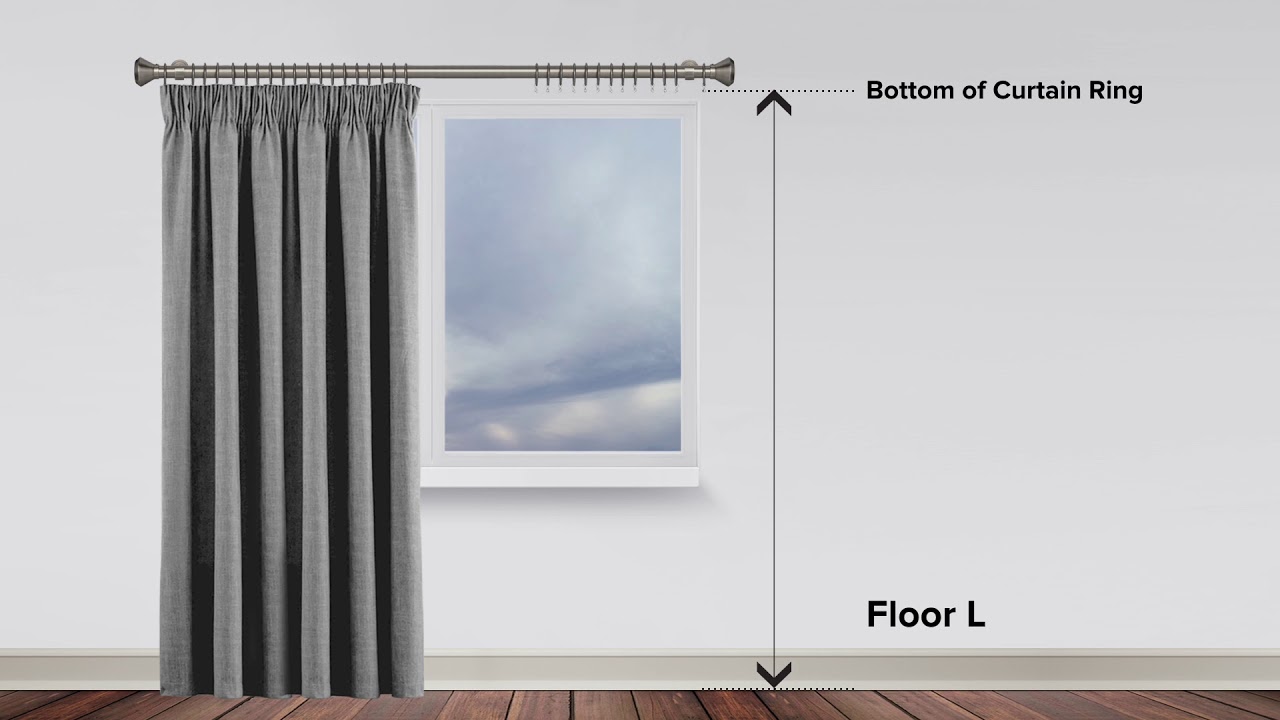
DIY-measuring for a custom curtain order is the single biggest cause of short drops, light gaps at the floor, and side returns that don’t quite meet the wall. A made-to-measure curtain is cut to the millimetre you supply — there is no margin for error, no adjustment after the fabric is cut, and no returns policy once the panels are sewn. The AED 150–300 a professional measurement visit costs is the cheapest insurance you will ever buy on a custom order.
Dubai complicates this in two ways: first, many towers have non-standard ceiling heights thanks to dropped bulkheads for AC and sprinkler runs; second, villa windows often sit over raised marble sills or built-in seating that throws off a tape measure pulled flat. Book the measurement before you commit to fabric. Our made-to-measure guide for UAE homes details exactly what a site visit should cover.
4. Not Asking About UV- and Heat-Resistant Fabric
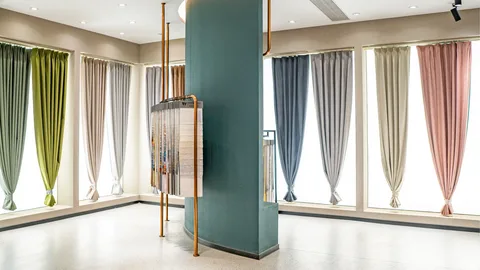
Dubai’s sun is not a soft ambient light — it is a sustained UV assault that fades and embrittles ordinary fabric within a single summer. A curtain that looks rich and saturated in January can be bleached streaky-grey by July, with fibres so weakened they tear along the fold lines. Buyers almost never ask about UV resistance because it isn’t a spec on the label of ready-made panels; it only comes up when you’re specifying fabric for a custom order.
The fix: ask explicitly for UV-stable and heat-resistant lining on any curtain facing south, west, or direct afternoon sun. Blackout lining alone is not enough — it blocks light but not UV degradation. Look for fabrics labelled solution-dyed or with a bonded UV-resistant interliner. Our guide to curtain choices for homes facing direct sunlight names specific fabric families that hold up in Gulf conditions, and our broader curtain fabric guide covers the trade-offs between aesthetic and durability.
5. Choosing Fabric Colour Under Store Lighting Only
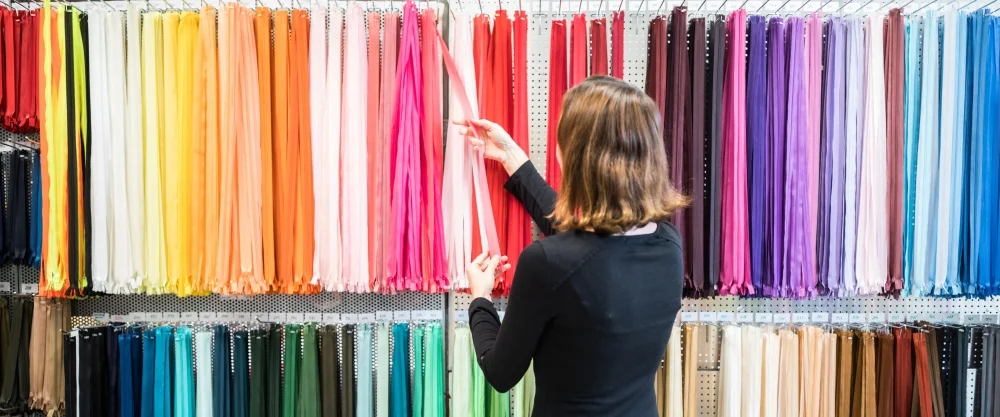
Showroom lighting is designed to make fabric look good — warm, even, and shadow-free. Your living room in Dubai is the opposite: brutally bright midday sunlight shifting to warm 2700K artificial light in the evening. A swatch that reads cool neutral grey in a showroom can look distinctly pink at noon and muddy brown under your pendant lights. This isn’t a subtle shift; it is dramatic enough to make a curtain you loved in-store feel wrong once installed.
The fix takes five minutes and zero cost: take the swatch home and look at it in the actual room, at three different times of day. Morning, midday, and evening under your own lighting. If the supplier won’t lend a swatch, find one who will — a serious curtain supplier in Dubai should lend swatches against a refundable deposit. Our guide to choosing the perfect curtain colour covers how Dubai’s specific light conditions shift colour perception and which neutrals hold up across the day.
6. Prioritising the Cheapest Ready-Made Option Over Long-Term Value
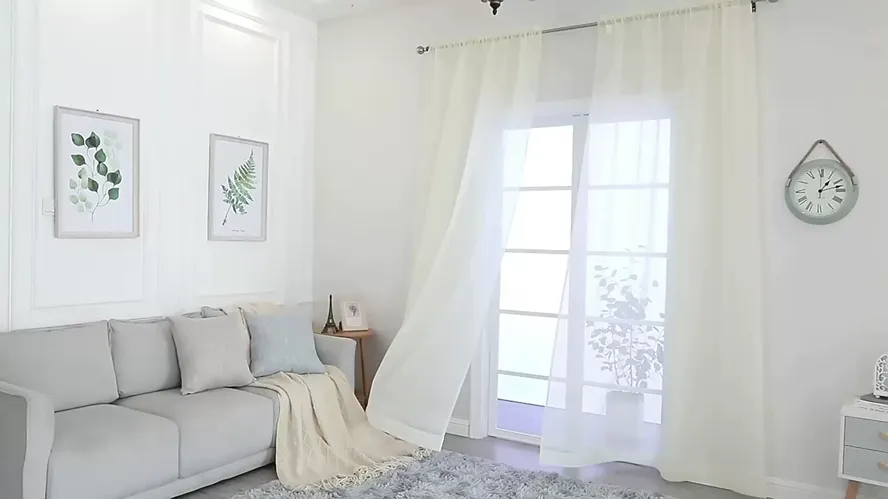
A AED 250 ready-made panel from a discount homeware store feels like a win in the moment. Eighteen months later, when the lining has yellowed, the stitching is fraying at the heading, and the fabric has faded unevenly across sun-exposed vs shaded folds, that same panel needs replacing — and the replacement is another AED 250. One properly made set at AED 1,500–2,500, with quality lining, UV-stable fabric, and reinforced stitching, will outlast three or four cycles of the cheap option and look better throughout.
This isn’t a “get three quotes” tip — it’s a value calculation specific to Dubai’s climate, which is unusually harsh on textile goods. Calculate cost per year of use, not cost per panel. If you’re weighing curtains against blinds in the same room, our comparison on curtains vs blinds covers which option delivers better long-term value in Dubai’s sun and dust. For deeper fabric trade-offs, our mastering the art of choosing curtains is the companion piece to this article.
7. Not Planning for Motorization Before Installation
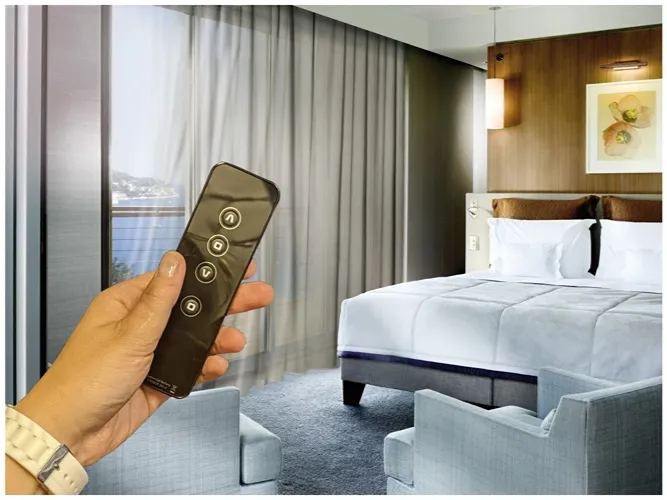
Retrofitting a motor into an existing curtain track is expensive, often requires replacing the entire track, and is sometimes outright impossible — particularly with eyelet-on-pole setups, where there is no track cavity to house a motor. The decision to motorise or not has to be made before the track is specified and the heading chosen, because motorised tracks need a continuous power source (wired or battery) and a track design that accepts the motor head.
Dubai-specific angle: smart-home adoption here is among the highest in the region, and buyers increasingly expect motorised curtains to integrate with KNX, Control4, or Apple HomeKit down the line — even when they’re not specifying it on day one. Decide upfront, even if you’re not choosing it now. Specify a track that accepts a motor later, leave a power drop in the wall, and you’ve preserved the option for a fraction of the cost. Our guide on fitting curtain tracks on walls covers the planning details, and our primer on different types of motorized blinds applies the same logic to the wider window-treatment decision.
Avoid These Mistakes Before You Buy
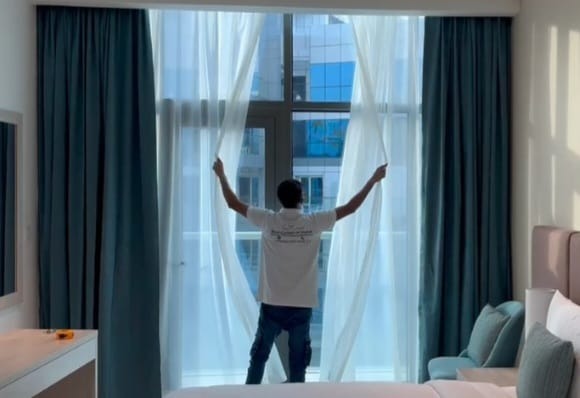
Every one of these seven mistakes shares a single root cause: a decision was made too early, on too little information, against the wrong reference point. Slow the decision down by one week — measure properly, specify fabric against Dubai’s actual sun, plan for motorisation before the track goes up — and the entire purchase shifts from a likely regret to a one-time investment. If you’re at the start of the process, pair this article with our companion guide on mastering the art of choosing curtains, then request a free measurement visit before committing to any fabric or heading.
Related Reading
→ Checklist Before Buying Blinds in Dubai — same “before you buy” format, applied to blinds.
→ The Do’s and Don’ts of Pairing Curtains and Blinds — if you’re running curtains over blinds in the same window.
→ Trending Ideas for Curtains and Blinds — what’s working in Dubai interiors right now, for inspiration after the practical decisions are settled.